.jpg)
Our Programs
.jpg)

.jpg)

EDUCATION PROGRAM

THE PROBLEM
The children come from impoverished backgrounds, where the average adult has only a third-grade education. Parents lack an understanding of how crucial education is for their children. As a result, these children typically do not receive the support and encouragement needed at home, placing them at a disadvantage the moment they start first grade.
OUR APPROACH
EI’s unique, intensive, hands-on program focuses on the community as a whole while also giving individualized attention to each child and family. The program is multi-faceted, supporting the child at various levels. The child and family are supported at home through the home visit program, the child receives tutoring support, access to computers and activities, and fun at the EI center and medical care.
The staff collaborates with the public school to monitor attendance and prevent dropouts. Children needing extra help receive tutoring in math and Spanish from volunteer secondary and students, mentored by two full-time teachers. At the EI center, kids enjoy access to books, toys, computers, and educational games in a safe environment. They also participate in regular piñata parties and small field trips, creating a strong support system to ensure their.
Additional programs, such as Computing, English, School Snacks, Art, Culture, and Sports, are an integral part of our educational approach, aimed at providing students with the opportunities needed to reach their full potential, both academically and personally
Educational and Activity Study Center

Many students come from low-income households where living conditions make it difficult to have a quiet, adequate space for studying. Overcrowding, noise, and limited access to basic learning resources create significant barriers to concentration and academic success. Without a supportive home environment, students face additional challenges in reaching their full potential.
Empowerment International Educational and Activity Center is situated on the outskirts of the colonial city of Granada, strategically placed for easy access by local children. The center features computers, Internet, a printer, a scanner, a children’s library. The EI office is located inside the center.
It provides a much-needed space for students to meet outside of school, since there is no shared area nearby. In the center, friendships develop, and students encourage one another to stay in school.From Monday to Saturday, we serve 360 students across all grades. For many, it’s the only safe space stay and play, where they learn to interact, resolve conflicts, and share. The EI center is a place where children can simply be children.
The center also functions as a safe haven for community members of all ages. Mothers come in the evenings to check on their kids, volunteer at the center, attend monthly workshops, or take Zumba classes. It’s a place where everyone can relieve stress.
HOME VISIT PROGRAM
.jpg)
THE PROBLEM
In many families, education is not seen as a priority. Parents often lack the guidance, tools, and support needed to create a home environment that encourages consistent their child. Challenges within the household—such as poverty, low expectations, or unresolved family difficulties—can become barriers to a child’s educational progress. Without intentional mentorship and support, these obstacles can negatively impact a student’s motivation, performance, and long-term opportunities.
OUR APPROACH
The home visit program aims to mentor parents in valuing education by providing them with tools to address household issues that hinder learning. Each child is assigned to an E.I. staff member who visits regularly, fostering a trusting relationship with the parents. Through building trust and mutual respect, the staff gradually influences family attitudes toward education. Parents also receive emotional health support through counseling, and we help strengthen family connections through monthly workshops that teach them to raise children with love, patience, encouragement, and respect.
Additionally, home visits help ensure children do not miss school. The program works closely with the education team, which sends reports when a student is reported to have missed multiple days. This long-term relationship between staff, parents, and students helps the community feel like a family, fostering respect and trust in the team to support their families.
Children and Youth Mentoring
.jpg)
THE PROBLEM
Many children and teens, affected by generational poverty and limited educational opportunities, are seen as adults and expected to contribute to the family income or care for siblings. It's common for girls to start having children during their teenage years, those who pursue secondary education often become the first in their families to do so, facing cultural pressures leave school after achieving basic literacy. School-related expenses like fees, uniforms, supplies can be burdensome, and with large families, parents often struggle to meet these costs, typically sending their children to school only until they can read and write before withdrawing them. Teens frequently lack awareness of the various career available in Nicaragua and do not fully understand the benefits of different professions how to navigate a professional environment, which can hinder their career prospects.
The program to support the comprehensive development of children and teens into successful adults through intensive, hands-on approach, providing ongoing emotional, social and academic support to them and their families. Teens and children participate in monthly workshops that support them in leadership and life skills.
Secondary school and university students are introduced to various job opportunities available in Nicaragua. Local business owners and successful professionals are regularly invited to talk with teens about their jobs. The goal of this initiative is to enable secondary school students to make informed career choices and to understand the technical and vocational training required in each field.
Secondary school students tutor primary school children on a volunteer basis. This program started in 2009 on a small scale. Two years later, we have 30 secondary school students tutoring 80 children K-Grade 4 each day. This program has boosted both the performance of the younger children and the self-esteem of the teens. This is one example of EI enabling community members to build their own future.
Health and wellness are an essential part of our program. Teens receive regular pediatric check-ups, support for glasses and medications, and access to psychological consultations. Recreational activities are also included, providing opportunities for exercise, social interaction, and stress relief. Together, these services complement our educational and leadership programs, helping teens thrive physically, mentally, and emotionally.
Group sessions, classes, and counseling are offered to help teens make better choices about sex, drugs, alcohol, and gangs. Secondary school and university students are also introduced to various career options.
UNIVERSITY PROGRAM IMPACT
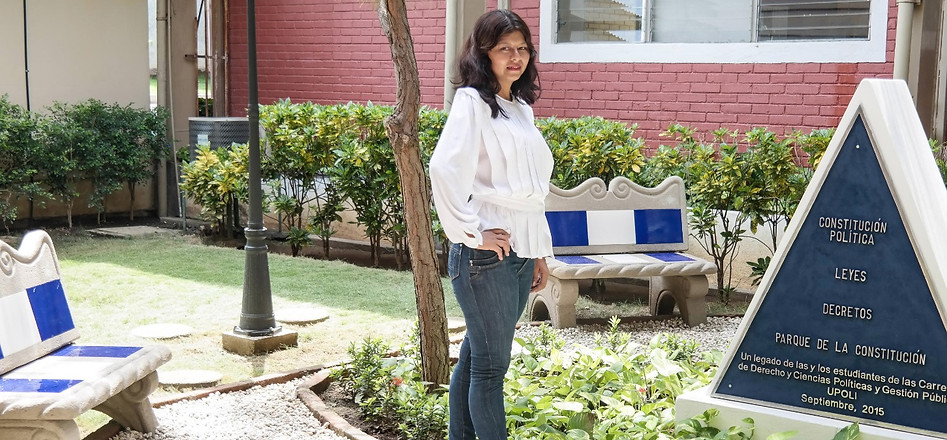
THE PROBLEM
For many students in the communities Empowerment International supports, attending university is difficult due to financial constraints and academic challenges. Home circumstances often make pursuing long-term career goals feel out of reach, and some students face the added challenge of limited family support.
OUR APPROACH
Students are afforded a range of resources to ensure their in higher education, including stipends, tuition assistance, computer and internet access, dedicated spaces, career counseling, emotional support, medical care, and homework assistance. When a student chooses to pursue university education, they work alongside an EI staff member to select an appropriate university and career pathway that aligns with their personal interests and the job market in Nicaragua. University students actively engage with the community through volunteering, assisting younger children from local neighborhoods who attend the center consistently, and serving as positive role models. Throughout their university experience, students become influential figures within the community, particularly for the children enrolled at the Empowerment Center.
At the end of the University Program, students are equipped with a clear career path and promising job opportunities, along with a university degree. Many return to the EI center with deep gratitude and become donors or long-term volunteers as a way to give back for the support they received. Initiatives like’s University Program contribute significantly to Nicaragua's efforts in building a more productive and educated workforce. Companies from abroad, such as the USA’s Sitel, which employs 2,000 Nicaraguans, are already creating job opportunities.
A more educated workforce will help attract even more foreign industries. Additionally, an educated population contributes to lower birth rates, which is crucial for alleviating poverty. The United Nations on Population and Development noted in April 2011 that “Higher levels of education, among girls, had a strong correlation to declining fertility and better development outcomes…”
Photography Club

THE PROGRAM
EI’s photography program began in 2007 when Kathy Adams and a guest instructor hosted a 5 week-long photography class for 8 of EI’s older students. Since that time, the program has been expanding.
In 2008 14 children were selected to participate in the class, which took place in July. Several of these students have continued to participate in weekly classes since that time. Many other students have shown an interest in taking part in the class.
The benefits of the photography program have been great. The staff has witnessed participants’ attitudes change. Many attend school more regularly and have gained the self-confidence that so many of EI’s students lack.